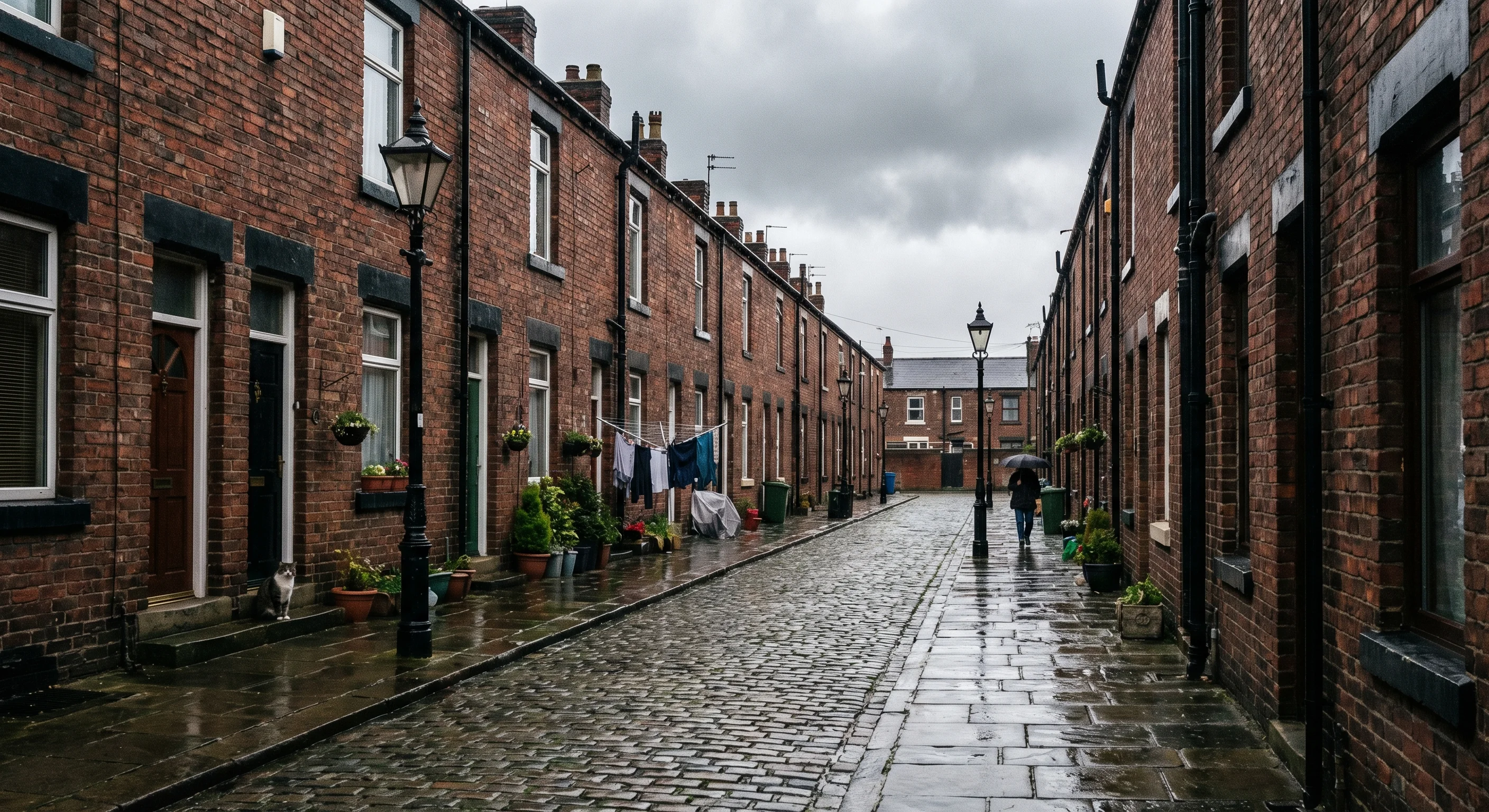
If you've lived in Leeds for any length of time, you'll know the city's signature housing type: the Victorian back-to-back terrace. Built in the late 19th century to house workers in the mills and factories, these properties now make up a significant proportion of Leeds' housing stock — particularly in areas like Headingley, Hyde Park, Armley, Beeston, and Chapel Allerton.
They're characterful, affordable (relatively speaking), and extremely popular. They're also genuinely challenging to move in and out of, for reasons that aren't obvious until you have a Luton van outside and a three-seat sofa that won't make the turn on the stairs.
Understanding Leeds Terrace Types
Not all Leeds terraces are the same. The two main types present different access challenges:
Through terraces have a front door facing the street and a back door (usually into a small yard or garden). Large items can come in through either end. The front door typically faces the main street and the back is accessed via a rear alleyway or shared passage.
Back-to-back terraces have a front door on one side and share a wall with another house on the other three sides — no rear access at all except through a shared ginnel (the narrow alleyway between blocks). Everything — sofas, beds, wardrobes — must come through the front door or, if there's a side ginnel, through that narrow passage.
The Three Main Challenges
1. Narrow Front Doors
Victorian terrace front doors in Leeds are typically 72-76cm wide. Compare this to the standard modern sofa at 85-100cm wide and you can see the problem immediately. Getting a sofa through requires either dismantling (if modular), angling (if the arm can be removed), or going through a window in extreme cases.
What to do: Before moving day, measure your doorframe width and the width of every large piece of furniture. For sofas, check whether the arms detach. For wardrobes, check whether the door panels and shelves can be removed (they usually can). Beds almost always need the frame dismantling — this is completely normal and takes 10-15 minutes with the right tools.
2. Steep Internal Staircases
Victorian terraces were built for function, not spaciousness. The staircase going up to the first and second floor is typically steep (often 45°+), narrow, and with a tight 180° turn at the top or bottom. Getting a double mattress upstairs in a Headingley terrace is a two-person job involving careful rotation and usually a few bumped elbows.
What to do: Disassemble bed frames before the van arrives. Carry mattresses on their side, not flat. For wardrobes taller than 180cm, remove the top panel or doors to reduce height and weight. Communicate with your removal team about which furniture needs special handling — experienced Leeds removers have done this dozens of times.
3. No Off-Street Parking
Most Leeds terraces have no driveway. The van parks on the street, and items are carried across the pavement to the front door. On a typical Headingley street, the van may be 3-5 metres from your front door. On particularly narrow streets, the van may need to park slightly further away.
What to do: Have housemates or family members move cars from outside the property the night before to create space as close to the front door as possible. If your street has residents' permit parking, contact Leeds City Council about a temporary loading bay suspension (a few days' notice is usually sufficient).
Back-to-Back Specific Tips
If you're in a true back-to-back (no rear access), everything must navigate through the front door or the ginnel between blocks. Before moving day, walk through the ginnel and check its width — some are 70-80cm, others are narrower. Know this before the sofa arrives.
For back-to-backs in Hyde Park, Armley, and the older parts of Headingley, the ginnel is often the best route for long, narrow items (mattresses, long shelving units) even if the front door is technically wide enough. The ginnel provides a straight run where the front door may require awkward angling.
The Van Position Matters More Than You Think
Where the van parks relative to your front door affects the difficulty of every carry. The goal is to park as close as possible, with the van rear facing the front door. On one-way streets in Hyde Park, this means approaching from the right direction. On wider through-streets, the driver can usually position optimally. Ask your driver to assess the best parking position before loading starts.
What Experienced Leeds Removers Know
Any removal team that regularly works in Leeds' terrace areas will have developed specific knowledge. They'll know which Headingley streets have rear ginnel access. They'll know the turning angle required at the top of a typical LS6 staircase. They'll have the tools to disassemble and reassemble bed frames on-site. This local knowledge makes a genuine difference to how quickly and smoothly a terrace move goes — which is why we always recommend using a team that works in Leeds regularly rather than a generalist national service.